
Billy Graham is a renowned American Christian Evangelist whose lifetime audience, including radio and television broadcasts, topped 2.2 billion. Yet one day, when his wife Ruth was asked whether she ever thought about divorce, she said “No, I’ve never thought of divorce in all these 35 years of marriage but I did think of murder a few times.”
Bringing the delicate subject of divorce to the fore clearly necessitates discussing marriage since there would be no divorce without marriage in the first place. But tackling the complex issue of divorce from all possible dimensions is like trying to boil the ocean and would certainly cause nausea to Pink’s esteemed readers. So let us humbly attempt to limit our discourse to the highly relevant, yet frequently undermined, spiritual viewpoint.
Let us face reality. We live in a pluralistic society which has been heavily infused with a post-modern school of thought emerging mainly from the liberal democracy of the west. Full freedom and a ‘right’ to almost everything under the sun are stimulated. It is within this context that we have to navigate our discussion. Some of us lobby in favour of adapting to the evolving culture through legislation which accommodates the ‘modern life’. Others, because of un-waiving faith convictions, will never succumb to any new philosophy which undermines the marriage covenant. It is precisely at this point that the subject of marriage as a ‘covenant for life’ rather than a ‘mutual consent’ can be brought forward.
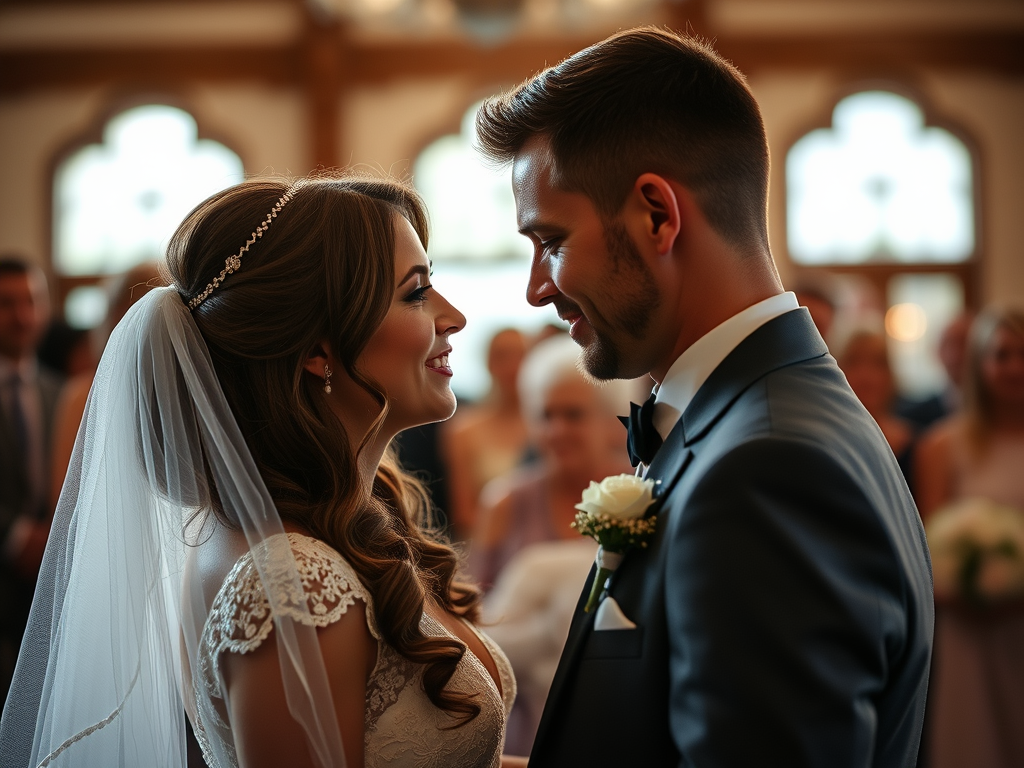
Civil marriage approaches marriage particularly from a legal standpoint, giving protection and rights to partners who have consented to marry. It ties the knot. Subject to the introduction of divorce, it nevertheless, ties it for life. But if the consenting partners, now contractually married, choose to deepen their consent before God through the Sacramental Ceremony within the Church, then such marriage goes well beyond ‘ a civil contract’. It has now been ‘sealed’ with the Divine Command rather than ‘tied’. It has now been transformed from ‘consent’ to a ‘Divine Covenant Commitment.’ “What God has joined together, let man not separate” (Matthew 19:6) Whilst in the case of a civil marriage, the married couple are solely responsive to the law of the State as a human institution, a marriage within the Sacramental Presence not only responds to the State but is most importantly responsive to the Divine Command which demands an indissoluble covenant.
Obviously, reality displays that in our marriages, even within the Church, excessive importance is placed on the exterior manifestation of the marriage ceremony. Rather than seeking the right spiritual disposition to receive God’s imparting Grace and blessing through the Sacramental Presence much emphasis is placed on the external materialistic aspect of the wedding ceremony, often resulting in spiritual sloth. A marriage, with all its joys, challenges and deep suffering can only be sustained through God’s loving wisdom and grace and not through expensive pre-wedding photo-shoots or lavish wedding receptions. The concept of love within marriage is often heavily distorted in the minds of some budding couples, who tend to view marriage as some kind of ‘safari trip’. In the words of Pope Benedict XVI “ love is indeed ‘ecstasy’, not in the sense of a moment of intoxication, but rather as a journey, an on-going exodus out of the closed, inward-looking self towards its liberation through self-giving and thus towards authentic self-discovery and indeed the discovery of God.”
But shall we disregard the innocent spouse in cases of a marriage collapse where, subject to availability, leads to an institutional divorce? Certainly not. Such victims need our constant support. Whether the innocent spouse upholds his or her faith convictions or not or whether he or she be tempted to engage in the benefits of divorce and risk re-marriage should never prejudice our sense of brotherhood and sisterhood as if these victims are second class citizens or children of a lesser God. The Church, unlike the State, has no right to impose its creed on anybody. However, it falls short of its evangelic mission, if it fails to proclaim the truth of the Gospel especially in matters of political decisions which may tarnish the integrity of the marriage union.
The worst scenario should divorce be round the corner is that, in a culture of disposable and push button quick fix solutions, divorce may tend to become almost an off the shelf commodity. It may be highly enticing, if not a pre-disposed convenience, for married couples with a stressful relationship to untie their marriage vow or forsake the Covenant commitment through divorce instead of exercising every possible effort to reconcile and heal the relationship. They may fail to recognise that as they say, even the ‘worst reconciliation’ is better than the best divorce.
(THIS ARTICLE WAS PUBLISHED IN PINK MAGAZINE (MALTA) IN MAY 2011- AUTHOR GORDON P VASSALLO)
(Note: this article was written pre introduction of divorce in Malta)

Leave a comment