
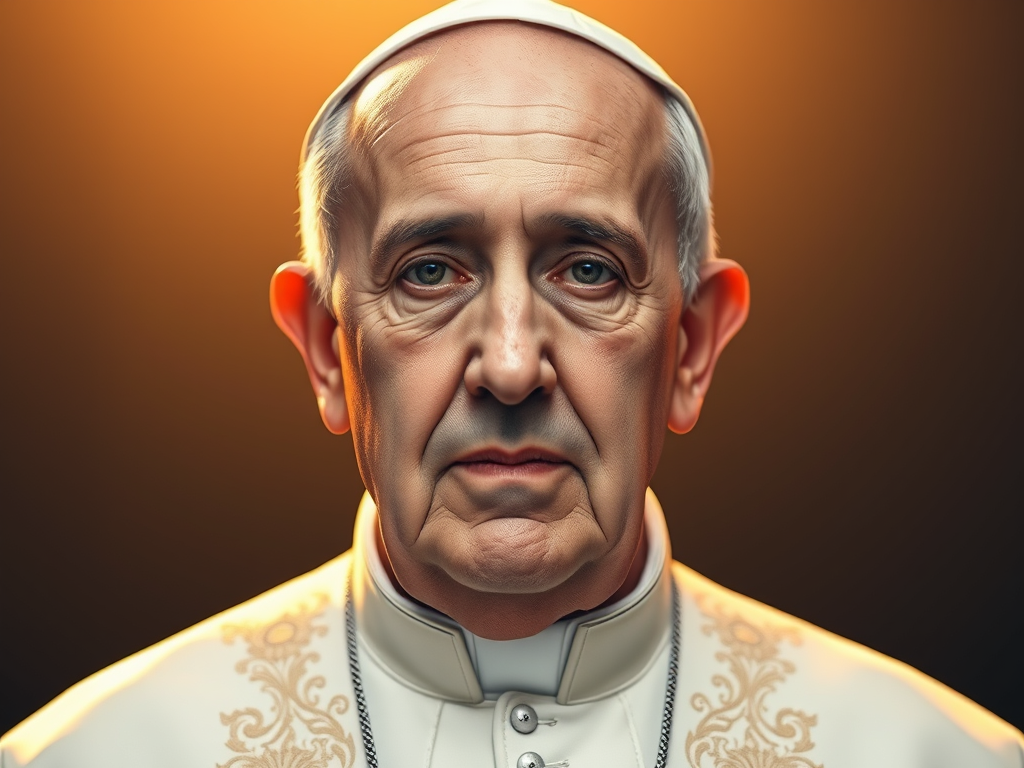
Lumen Fidei (The Light of Faith) is divided up into four chapters and an introduction. The introduction briefly describes why this encyclical was written. It introduces the key themes that will be presented throughout the encyclical. These themes particularly include light and journey.
Pope Francis strategically presents an argument. This argument emphasizes the relevance and importance of faith in the modern world. He begins with God’s revelation to the world. This revelation is recounted and passed on through Scripture and the Church. He then relates the gift of faith to our lives today.
Briefly, each chapter addresses the subsequent topics:
Chapter 1: Faith in the Old Testament, New Testament, and the Church
Chapter 2: Faith in the modern world (philosophy, science, world religions)
Chapter 3: The essentials of faith (creed, sacraments, prayer, morality)
Chapter 4: Faith and society / Faith and the common good
Here are more detailed summaries of each chapter:
Summary: Introduction to Lumen Fidei
Pope Francis introduces Lumen Fidei with clear reasons. He focuses on the topic of faith. Both he and Pope Benedict XVI emphasize this, especially during the Year of Faith. They also highlight its significance during the fiftieth anniversary of the Second Vatican Council. There is an urgent need today to understand the value and importance of faith—not just to Christians but all humankind.
The metaphor Pope Francis introduces and expands upon throughout the encyclical is that of light. Faith is the light that illumines our journey in life and provides clarity to all aspects of human existence. This understanding is critical today, because modern society rejects faith as subjective and infused only by fleeting emotion. In other words, living by faith is a dark, unenlightened pursuit.
Pope Francis, on the other hand, hopes that his encyclical will help the light of faith “grow.” He wants it to enlighten the present. He believes it will become a star to brighten the horizon of our journey. This is especially important when mankind is particularly in need of light” ( LF, 4).
EXTRACTS FROM INTRODUCTION
- The light of Faith: this is how the Church’s tradition speaks of the great gift brought by Jesus. In John’s Gospel, Christ says of himself: “I have come as light into the world, that whoever believes in me may not remain in darkness” (Jn 12:46). Saint Paul uses the same image: “God who said ‘Let light shine out of darkness,’ has shone in our hearts” (2 Cor 4:6).
- Those who believe, see; they see with a light that illumines their entire journey, for it comes from the risen Christ, the morning star which never sets.
- Yet in speaking of the light of faith, we can almost hear the objections of many of our contemporaries, for a humanity come of age, proud of its rationality and anxious to explore the future in novel ways. Faith thus appeared to some as an illusory light, preventing mankind from boldly setting out in quest of knowledge. Faith would thus be the illusion of light, an illusion which blocks the path of a liberated humanity to its future.
- Slowly but surely, however, it would become evident that the light of autonomous reason is not enough to illumine the future; ultimately the future remains shadowy and fraught with fear of the unknown. As a result, humanity renounced the search for a great light, Truth itself, in order to be content with smaller lights which illumine the fleeting moment yet prove incapable of showing the way. Yet in the absence of light everything becomes confused; it is impossible to tell good from evil, or the road to our destination from other roads which take us in endless circles, going nowhere.
- The light of faith is unique, since it is capable of illuminating every aspect of human existence. A light this powerful cannot come from ourselves but from a more primordial source: in a word, it must come from God. Faith is born of an encounter with the living God who calls us and reveals his love, a love which precedes us and upon which we can lean for security and for building our lives.
- Faith is a light coming from the past, the light of the foundational memory of the life of Jesus which revealed his perfectly trustworthy love, a love capable of triumphing over death.
- Faith is sustained by Christ’s presence and by the working of the Holy Spirit.
- The Church never takes faith for granted but knows that this gift of God needs to be nourished and reinforced so that it can continue to guide her pilgrim way.
- Faith clearly showed how faith enriches life in all its dimensions.
- In God’s gift of faith, a supernatural infused virtue, we realize that a great love has been offered us, a good word has been spoken to us, and that when we welcome that word, Jesus Christ the Word made flesh, the Holy Spirit transforms us, lights up our way to the future and enables us joyfully to advance along that way on wings of hope. Thus wonderfully interwoven, faith, hope and charity are the driving force of the Christian life as it advances towards full communion with God.
Summary: Chapter 1 of Lumen Fidei
In chapter 1 of Lumen Fidei, Pope Francis outlines the development of faith. He does this through a retelling of salvation history in the Old and New Testaments. In essence, he hopes to show that faith does not come from an internal gaze. It comes from an encounter with God. It also comes from those people who have come before us and have themselves encountered God.
God called Abraham and gave him a promise. God saved the Israelites and gave them a promise. God became man and gave up his life as a promise of our salvation. We can have faith in God. He has shown us his love. We know he is faithful to his promises.
EXTRACTS FROM CHAPTER ONE
Abraham, our father in faith
If we want to understand what faith is, we need to follow the route it has taken, the path trodden by believers, as witnessed first in the Old Testament. Here a unique place belongs to Abraham, our father in faith. Something disturbing takes place in his life: God speaks to him; he reveals himself as a God who speaks and calls his name. Faith is linked to hearing.
Faith is our response to a word which engages us personally, to a “Thou” who calls us by name.
The sight which faith would give to Abraham would always be linked to the need to take this step forward: faith “sees” to the extent that it journeys, to the extent that it chooses to enter into the horizons opened up by God’s word. It promises a future with hope.
Sarah your wife shall bear you a son, and you shall name him Isaac” (Gen 17:19). The God who asks Abraham for complete trust reveals himself to be the source of all life.
THE FAITH OF ISRAEL
The history of the people of Israel in the Book of Exodus follows in the wake of Abraham’s faith. Israel trusts in God, who promises to set his people free from their misery. Faith becomes a summons to a lengthy journey leading to worship of the Lord on Sinai and the inheritance of a promised land.
God’s light shines for Israel through the remembrance of the Lord’s mighty deeds, recalled and celebrated in worship, and passed down from parents to children. Here we see how the light of faith is linked to concrete life-stories, to the grateful remembrance of God’s mighty deeds and the progressive fulfilment of his promises.
The history of Israel also shows us the temptation of unbelief to which the people yielded more than once. Here the opposite of faith is shown to be idolatry.
While Moses is speaking to God on Sinai, the people cannot bear the mystery of God’s hiddenness, they cannot endure the time of waiting to see his face. Faith by its very nature demands renouncing the immediate possession which sight would appear to offer; it is an invitation to turn to the source of the light, while respecting the mystery of a countenance which will unveil itself personally in its own good time.
Idols exist, we begin to see, as a pretext for setting ourselves at the centre of reality and worshiping the work of our own hands. Once man has lost the fundamental orientation which unifies his existence, he breaks down into the multiplicity of his desires; in refusing to await the time of promise, his life-story disintegrates into a myriad of unconnected instants.
Faith consists in the willingness to let ourselves be constantly transformed and renewed by God’s call. Faith is God’s free gift, which calls for humility and the courage to trust and to entrust; it enables us to see the luminous path leading to the encounter of God and humanity: the history of salvation.
THE FULLNESS OF CHRISTIAN FAITH
Christian faith is centred on Christ; it is the confession that Jesus is Lord and that God has raised him from the dead (cf. Rom 10:9). All the threads of the Old Testament converge on Christ; he becomes the definitive “Yes” to all the promises, the ultimate basis of our “Amen” to God (cf. 2 Cor 1:20).
If Israel continued to recall God’s great acts of love, which formed the core of its confession of faith and broadened its gaze in faith, the life of Jesus now appears as the locus of God’s definitive intervention, the supreme manifestation of his love for us. The word which God speaks to us in Jesus is not simply one word among many, but his eternal Word (cf. Heb 1:1-2). God can give no greater guarantee of his love, as Saint Paul reminds us (cf. Rom 8:31-39). Christian faith is thus faith in a perfect love, in its decisive power, in its ability to transform the world and to unfold its history. “We know and believe the love that God has for us” (1 Jn 4:16). In the love of God revealed in Jesus, faith perceives the foundation on which all reality and its final destiny rest.
the evangelists could see the hour of Christ’s crucifixion as the culmination of the gaze of faith; in that hour the depth and breadth of God’s love shone forth.
Christ’s death discloses the utter reliability of God’s love above all in the light of his resurrection. As the risen one, Christ is the trustworthy witness, deserving of faith (cf. Rev 1:5; Heb 2:17), and a solid support for our faith. “If Christ has not been raised, your faith is futile”, says Saint Paul (1 Cor 15:17).
Precisely because Jesus is the Son, because he is absolutely grounded in the Father, he was able to conquer death and make the fullness of life shine forth. Our culture has lost its sense of God’s tangible presence and activity in our world. We think that God is to be found in the beyond, on another level of reality, far removed from our everyday relationships. But if this were the case, if God could not act in the world, his love would not be truly powerful, truly real, and thus not even true, a love capable of delivering the bliss that it promises. It would make no difference at all whether we believed in him or not. Christians, on the contrary, profess their faith in God’s tangible and powerful love which really does act in history and determines its final destiny: a love that can be encountered, a love fully revealed in Christ’s passion, death and resurrection.
Faith does not merely gaze at Jesus, but sees things as Jesus himself sees them, with his own eyes: it is a participation in his way of seeing. In many areas in our lives we trust others who know more than we do. We trust the architect who builds our home, the pharmacist who gives us medicine for healing, the lawyer who defends us in court. We also need someone trustworthy and knowledgeable where God is concerned. Jesus, the Son of God, is the one who makes God known to us (cf. Jn 1:18).
Christian faith is faith in the incarnation of the Word and his bodily resurrection; it is faith in a God who is so close to us that he entered our human history. Far from divorcing us from reality, our faith in the Son of God made man in Jesus of Nazareth enables us to grasp reality’s deepest meaning and to see how much God loves this world and is constantly guiding it towards himself. This leads us, as Christians, to live our lives in this world with ever greater commitment and intensity.
SALVATION BY FAITH
Paul rejects the attitude of those who would consider themselves justified before God on the basis of their own works. Such people, even when they obey the commandments and do good works, are centred on themselves; they fail to realize that goodness comes from God. Those who live this way, who want to be the source of their own righteousness, find that the latter is soon depleted and that they are unable even to keep the law.
As Saint Paul puts it: “By grace you have been saved through faith, and this is not your own doing; it is the gift of God” (Eph 2:8).
Faith’s new way of seeing things is centred on Christ. Faith in Christ brings salvation because in him our lives become radically open to a love that precedes us, a love that transforms us from within, acting in us and through us.
Christ dwells in our hearts through the Holy Spirit. Faith knows that God has drawn close to us, that Christ has been given to us as a great gift which inwardly transforms us, dwells within us and thus bestows on us the light that illumines the origin and the end of life.
We come to see the difference, then, which faith makes for us. Those who believe are transformed by the love to which they have opened their hearts in faith. By their openness to this offer of primordial love, their lives are enlarged and expanded. “It is no longer I who live, but Christ who lives in me” (Gal 2:20).
he self-awareness of the believer now expands because of the presence of another; it now lives in this other and thus, in love, life takes on a whole new breadth. Here we see the Holy Spirit at work. The Christian can see with the eyes of Jesus and share in his mind, his filial disposition, because he or she shares in his love, which is the Spirit. In the love of Jesus, we receive in a certain way his vision. Without being conformed to him in love, without the presence of the Spirit, it is impossible to confess him as Lord (cf. 1 Cor 12:3).
THE ECCLESIAL FORM OF FAITH
Just as Christ gathers to himself all those who believe and makes them his body, so the Christian comes to see himself as a member of this body, in an essential relationship with all other believers. The image of a body does not imply that the believer is simply one part of an anonymous whole, a mere cog in a great machine; rather, it brings out the vital union of Christ with believers and of believers among themselves (cf. Rom 12:4-5)
Outside the Church faith loses its “measure”; it no longer finds its equilibrium, the space needed to sustain itself. Faith is necessarily ecclesial; it is professed from within the body of Christ as a concrete communion of believers.
Summary: Chapter 2 of Lumen Fidei
In chapter 2 of Lumen Fidei, Pope Francis addresses arguments from secularism. He also addresses arguments from relativism. These arguments challenge faith today. He puts faith and truth into the correct context. He uses the analogy of light as it applies to philosophy, science, non-Christians, non-believers, and the study of theology. He shows that faith, truth, and reason do not need to be opposed to each other. Faith is truth, and it enlightens human reason.
EXTRACTS FROM CHAPTER TWO
FAITH AND TRUTH
Unless you believe, you will not understand (cf. Is 7:9). The Greek version of the Hebrew Bible, the Septuagint translation produced in Alexandria, gives the above rendering of the words spoken by the prophet Isaiah to King Ahaz. In this way, the issue of the knowledge of truth became central to faith.
The firm foundation that Isaiah promises to the king is indeed grounded in an understanding of God’s activity and the unity which he gives to human life and to the history of his people.
the prophetic text leads to one conclusion: we need knowledge, we need truth, because without these we cannot stand firm, we cannot move forward. Faith without truth does not save, it does not provide a sure footing. It remains a beautiful story, the projection of our deep yearning for happiness, something capable of satisfying us to the extent that we are willing to deceive ourselves. Either that, or it is reduced to a lofty sentiment which brings consolation and cheer, yet remains prey to the vagaries of our spirit and the changing seasons, incapable of sustaining a steady journey through life.
Today more than ever, we need to be reminded of this bond between faith and truth, given the crisis of truth in our age. In contemporary culture, we often tend to consider the only real truth to be that of technology: truth is what we succeed in building and measuring by our scientific know-how, truth is what works and what makes life easier and more comfortable. Nowadays this appears as the only truth that is certain, the only truth that can be shared, the only truth that can serve as a basis for discussion or for common undertakings. Yet at the other end of the scale we are willing to allow for subjective truths of the individual, which consist in fidelity to his or her deepest convictions, yet these are truths valid only for that individual and not capable of being proposed to others in an effort to serve the common good. But Truth itself, the truth which would comprehensively explain our life as individuals and in society, is regarded with suspicion. Surely this kind of truth — we hear it said — is what was claimed by the great totalitarian movements of the last century, a truth that imposed its own world view in order to crush the actual lives of individuals. In the end, what we are left with is relativism, in which the question of universal truth — and ultimately this means the question of God — is no longer relevant. It would be logical, from this point of view, to attempt to sever the bond between religion and truth, because it seems to lie at the root of fanaticism, which proves oppressive for anyone who does not share the same beliefs. In this regard, though, we can speak of a massive amnesia in our contemporary world. The question of truth is really a question of memory, deep memory, for it deals with something prior to ourselves and can succeed in uniting us in a way that transcends our petty and limited individual consciousness. It is a question about the origin of all that is, in whose light we can glimpse the goal and thus the meaning of our common path.
KNOWLEDGE OF THE TRUTH AND LOVE
In the Bible, the heart is the core of the human person, where all his or her different dimensions intersect: body and spirit, interiority and openness to the world and to others, intellect, will and affectivity. If the heart is capable of holding all these dimensions together, it is because it is where we become open to truth and love, where we let them touch us and deeply transform us. Faith transforms the whole person precisely to the extent that he or she becomes open to love. Through this blending of faith and love we come to see the kind of knowledge which faith entails, its power to convince and its ability to illumine our steps. Faith knows because it is tied to love, because love itself brings enlightenment. Faith’s understanding is born when we receive the immense love of God which transforms us inwardly and enables us to see reality with new eyes.
Indeed, most people nowadays would not consider love as related in any way to truth. Love is seen as an experience associated with the world of fleeting emotions, no longer with truth.
True, it engages our affectivity, but in order to open it to the beloved and thus to blaze a trail leading away from self-centredness and towards another person, in order to build a lasting relationship; love aims at union with the beloved. Here we begin to see how love requires truth. Only to the extent that love is grounded in truth can it endure over time, can it transcend the passing moment and be sufficiently solid to sustain a shared journey. If love is not tied to truth, it falls prey to fickle emotions and cannot stand the test of time. True love, on the other hand, unifies all the elements of our person and becomes a new light pointing the way to a great and fulfilled life. Without truth, love is incapable of establishing a firm bond; it cannot liberate our isolated ego or redeem it from the fleeting moment in order to create life and bear fruit.
If love needs truth, truth also needs love. Love and truth are inseparable. Without love, truth becomes cold, impersonal and oppressive for people’s day-to-day lives. The truth we seek, the truth that gives meaning to our journey through life, enlightens us whenever we are touched by love. One who loves realizes that love is an experience of truth, that it opens our eyes to see reality in a new way, in union with the beloved.
In savouring the love by which God chose them and made them a people, Israel came to understand the overall unity of the divine plan. Faith-knowledge, because it is born of God’s covenantal love, is knowledge which lights up a path in history
FAITH AS HEARING AND SIGHT
Hearing emphasizes personal vocation and obedience, and the fact that truth is revealed in time. Sight provides a vision of the entire journey and allows it to be situated within God’s overall plan; without this vision, we would be left only with unconnected parts of an unknown whole.
It is a hearing which calls for discipleship, as was the case with the first disciples: “Hearing him say these things, they followed Jesus” (Jn 1:37). But faith is also tied to sight. Seeing the signs which Jesus worked leads at times to faith, as in the case of the Jews who, following the raising of Lazarus, “having seen what he did, believed in him” (Jn 11:45). At other times, faith itself leads to deeper vision: “If you believe, you will see the glory of God” (Jn 11:40). In the end, belief and sight intersect: “Whoever believes in me believes in him who sent me. And whoever sees me sees him who sent me” (Jn 12:44-45).
How does one attain this synthesis between hearing and seeing? It becomes possible through the person of Christ himself, who can be seen and heard. He is the Word made flesh, whose glory we have seen (cf. Jn 1:14). The light of faith is the light of a countenance in which the Father is seen. In the Fourth Gospel, the truth which faith attains is the revelation of the Father in the Son, in his flesh and in his earthly deeds, a truth which can be defined as the “light-filled life” of Jesus.
It was only in this way, by taking flesh, by sharing our humanity, that the knowledge proper to love could come to full fruition. For the light of love is born when our hearts are touched and we open ourselves to the interior presence of the beloved, who enables us to recognize his mystery.
THE DIALOGUE BETWEEN FAITH AND REASON
The encounter of the Gospel message with the philosophical culture of the ancient world proved a decisive step in the evangelization of all peoples, and stimulated a fruitful interaction between faith and reason which has continued down the centuries Blessed John Paul II, in his Encyclical Letter Fides et Ratio, showed how faith and reason each strengthen the other.[to our own times.
The light of love proper to faith can illumine the questions of our own time about truth. Truth nowadays is often reduced to the subjective authenticity of the individual, valid only for the life of the individual. A common truth intimidates us, for we identify it with the intransigent demands of totalitarian systems. But if truth is a truth of love, if it is a truth disclosed in personal encounter with the Other and with others, then it can be set free from its enclosure in individuals and become part of the common good.
Truth leads to humility, since believers know that, rather than ourselves possessing truth, it is truth which embraces and possesses us. Far from making us inflexible, the security of faith sets us on a journey; it enables witness and dialogue with all.
Nor is the light of faith, joined to the truth of love, extraneous to the material world, for love is always lived out in body and spirit; the light of faith is an incarnate light radiating from the luminous life of Jesus. It also illumines the material world, trusts its inherent order and knows that it calls us to an ever widening path of harmony and understanding.
FAITH AND THE SEARCH FOR GOD
What other reward can God give to those who seek him, if not to let himself be Religious man strives to see signs of God in the daily experiences of life, in the cycle of the seasons, in the fruitfulness of the earth and in the movement of the cosmos. God is light and he can be found also by those who seek him with a sincere heart.found?
Religious man is a wayfarer; he must be ready to let himself be led, to come out of himself and to find the God of perpetual surprises.
Because faith is a way, it also has to do with the lives of those men and women who, though not believers, nonetheless desire to believe and continue to seek. To the extent that they are sincerely open to love and set out with whatever light they can find, they are already, even without knowing it, on the path leading to faith. Any-one who sets off on the path of doing good to others is already drawing near to God, is already sustained by his help, for it is characteristic of the divine light to brighten our eyes whenever we walk towards the fullness of love.
FAITH AND THEOLOGY
Clearly, theology is impossible without faith; it is part of the very process of faith, which seeks an ever deeper understanding of God’s self-disclosure culminating in Christ.
Theology is first and foremost the acceptance and the pursuit of a deeper understanding of the word which God speaks to us, the word which God speaks about himself, for he is an eternal dialogue of communion, and he allows us to enter into this dialogue.
Theology also shares in the ecclesial form of faith; its light is the light of the believing subject which is the Church. This implies, on the one hand, that theology must be at the service of the faith of Christians, that it must work humbly to protect and deepen the faith of everyone, especially ordinary believers.
Summary: Chapter 3 of Lumen Fidei
In many ways this entire encyclical addresses the essentials of Christian faith. However, this chapter in particular focuses on the backbone of Christian faith. This backbone is constituted by the creed, sacraments, prayer, and morality.
Pope Francis delves deeper into the necessity of the Church for Christian faith. He reveals its critical role in transmitting the faith. This occurs through the creed, Baptism, the Eucharist, the Lord’s Prayer, and the Ten Commandments.
Then, he briefly touches on the traditional four marks of the Church: one, holy, catholic, and apostolic.
EXTRACTS FROM CHAPTER THREE
THE CHURCH MOTHER OF OUR FAITH
Faith’s past, that act of Jesus’ love which brought new life to the world, comes down to us through the memory of others — witnesses — and is kept alive in that one remembering subject which is the Church. The Church is a Mother who teaches us to speak the language of faith. Saint John brings this out in his Gospel by closely uniting faith and memory and associating both with the working of the Holy Spirit, who, as Jesus says, “will remind you of all that I have said to you” (Jn 14:26). The love which is the Holy Spirit and which dwells in the Church unites every age and makes us contemporaries of Jesus, thus guiding us along our pilgrimage of faith.
It is impossible to believe on our own. Faith is not simply an individual decision which takes place in the depths of the believer’s heart, nor a completely private relationship between the “I” of the believer and the divine “Thou”, between an autonomous subject and God. By its very nature, faith is open to the “We” of the Church; it always takes place within her communion. We are reminded of this by the dialogical format of the creed used in the baptismal liturgy. Our belief is expressed in response to an invitation, to a word which must be heard and which is not my own; it exists as part of a dialogue and cannot be merely a profession originating in an individual
Those who receive faith discover that their horizons expand as new and enriching relationships come to life.
THE SACRAMENTS AND THE TRANSMISSION OF FAITH
The Church, like every family, passes on to her children the whole store of her memories. But how does this come about in a way that nothing is lost, but rather everything in the patrimony of faith comes to be more deeply understood? It is through the apostolic Tradition preserved in the Church with the assistance of the Holy Spirit that we enjoy a living contact with the foundational memory. What was handed down by the apostles — as the Second Vatican Council states — “comprises everything that serves to make the people of God live their lives in holiness and increase their faith. In this way the Church, in her doctrine, life and worship, perpetuates and transmits to every generation all that she herself is, all that she believes”.[35]
But what is communicated in the Church, what is handed down in her living Tradition, is the new light born of an encounter with the true God, a light which touches us at the core of our being and engages our minds, wills and emotions, opening us to relationships lived in communion.
in the Church’s liturgy. The sacraments communicate an incarnate memory, linked to the times and places of our lives, linked to all our senses; in them the whole person is engaged as a member of a living subject and part of a network of communitarian relationships. While the sacraments are indeed sacraments of faith,[36] it can also be said that faith itself possesses a sacramental structure. The awakening of faith is linked to the dawning of a new sacramental sense in our lives as human beings and as Christians, in which visible and material realities are seen to point beyond themselves to the mystery of the eternal.
Parents are called, as Saint Augustine once said, not only to bring children into the world but also to bring them to God, so that through baptism they can be reborn as children of God and receive the gift of faith.[38] Thus, along with life, children are given a fundamental orientation and assured of a good future; this orientation will be further strengthened in the sacrament of Confirmation with the seal of the Holy Spirit.
The sacramental character of faith finds its highest expression in the Eucharist. The Eucharist is a precious nourishment for faith: an encounter with Christ truly present in the supreme act of his love, the life-giving gift of himself. In the Eucharist we find the intersection of faith’s two dimensions. On the one hand, there is the dimension of history: the Eucharist is an act of remembrance, a making present of the mystery in which the past, as an event of death and resurrection, demonstrates its ability to open up a future, to foreshadow ultimate fulfilment. The liturgy reminds us of this by its repetition of the word hodie, the “today” of the mysteries of salvation. On the other hand, we also find the dimension which leads from the visible world to the invisible. In the Eucharist we learn to see the heights and depths of reality. The bread and wine are changed into the body and blood of Christ, who becomes present in his Passover to the Father: this movement draws us, body and soul, into the movement of all creation towards its fulfilment in God.
In the Creed, the believer thus states that the core of all being, the inmost secret of all reality, is the divine communion. The creed also contains a Christological confession: it takes us through all the mysteries of Christ’s life up to his death, resurrection and ascension into heaven before his final return in glory.
FAITH, PRAYER AND THE DECALOGUE
Two other elements are essential in the faithful transmission of the Church’s memory. First, the Lord’s Prayer, the “Our Father”. Here Christians learn to share in Christ’s own spiritual experience and to see all things through his eyes. From him who is light from light, the only-begotten Son of the Father, we come to know God and can thus kindle in others the desire to draw near to him.
It is in the light of faith, of complete entrustment to the God who saves, that the Ten Commandments take on their deepest truth, as seen in the words which introduce them: “I am the Lord your God, who brought you out of the land of Egypt” (Ex 20:2).
The Decalogue appears as the path of gratitude, the response of love, made possible because in faith we are receptive to the experience of God’s transforming love for us. And this path receives new light from Jesus’ teaching in the Sermon on the Mount (cf. Mt 5-7).
THE UNITY AND INTEGRITY OF FAITH
The unity of the Church in time and space is linked to the unity of the faith: “there is one body and one Spirit… one faith” (Eph 4:4-5).
We tend to think that a unity of this sort is incompatible with freedom of thought and personal autonomy. Yet the experience of love shows us that a common vision is possible, for through love we learn how to see reality through the eyes of others, not as something which impoverishes but instead enriches our vision. Genuine love, after the fashion of God’s love, ultimately requires truth, and the shared contemplation of the truth which is Jesus Christ enables love to become deep and enduring. This is also the great joy of faith: a unity of vision in one body and one spirit.
By professing the same faith within the Church, we stand firm on the same rock, we are transformed by the same Spirit of love, we radiate one light and we have a single insight into reality.
Summary: Chapter 4 of Lumen Fidei
In the final chapter of Lumen Fidei, Pope Francis describes the benefits of faith. Faith can unite all people in society. To explain this he uses the image of building the city of God.
Faith, as a common trust in the loving care of God the Father, unites society in a common brotherhood. This unity is achieved in ways that nothing else can: not truths, economies, governments, leaders, nor ideologies. This unity begins in the family and extends to society.
Faith also gives us hope in suffering. It does not promise healing. Instead, it assures us of what God has done for us and assures us that he is present.
Finally, in closing, the pope turns to Mary as the model of faith.
EXTRACTS OF CHAPTER FOUR
FAITH AND THE COMMON GOOD
Faith is not only presented as a journey, but also as a process of building, the preparing of a place in which human beings can dwell together with one another.
Faith reveals just how firm the bonds between people can be when God is present in their midst. Faith does not merely grant interior firmness, a steadfast conviction on the part of the believer; it also sheds light on every human relationship because it is born of love and reflects God’s own love. The God who is himself reliable gives us a city which is reliable.
Precisely because it is linked to love (cf. Gal 5:6), the light of faith is concretely placed at the service of justice, law and peace. Faith is born of an encounter with God’s primordial love, wherein the meaning and goodness of our life become evident; our life is illumined to the extent that it enters into the space opened by that love, to the extent that it becomes, in other words, a path and praxis leading to the fullness of love. The light of faith is capable of enhancing the richness of human relations, their ability to endure, to be trustworthy, to enrich our life together. Faith does not draw us away from the world or prove irrelevant to the concrete concerns of the men and women of our time. Without a love which is trustworthy, nothing could truly keep men and women united. Human unity would be conceivable only on the basis of utility, on a calculus of conflicting interests or on fear, but not on the goodness of living together, not on the joy which the mere presence of others can give. Faith makes us appreciate the architecture of human relationships because it grasps their ultimate foundation and definitive destiny in God, in his love, and thus sheds light on the art of building; as such it becomes a service to the common good.
FAITH AND THE FAMILY
The first setting in which faith enlightens the human city is the family. I think first and foremost of the stable union of man and woman in marriage. This union is born of their love, as a sign and presence of God’s own love, and of the acknowledgment and acceptance of the goodness of sexual differentiation, whereby spouses can become one flesh (cf. Gen 2:24) and are enabled to give birth to a new life, a manifestation of the Creator’s goodness, wisdom and loving plan. Grounded in this love, a man and a woman can promise each other mutual love in a gesture which engages their entire lives and mirrors many features of faith.
Promising love for ever is possible when we perceive a plan bigger than our own ideas and undertakings, a plan which sustains us and enables us to surrender our future entirely to the one we love.
In the family, faith accompanies every age of life, beginning with childhood: children learn to trust in the love of their parents. This is why it is so important that within their families parents encourage shared expressions of faith which can help children gradually to mature in their own faith. Young people in particular, who are going through a period in their lives which is so complex, rich and important for their faith, ought to feel the constant closeness and support of their families and the Church in their journey of faith.
A LIGHT FOR LIFE IN SOCIETY
Absorbed and deepened in the family, faith becomes a light capable of illumining all our relationships in society. As an experience of the mercy of God the Father, it sets us on the path of brotherhood. Modernity sought to build a universal brotherhood based on equality, yet we gradually came to realize that this brotherhood, lacking a reference to a common Father as its ultimate foundation, cannot endure. We need to return to the true basis of brotherhood. The history of faith has been from the beginning a history of brotherhood, albeit not without conflict.
At the heart of biblical faith is God’s love, his concrete concern for every person, and his plan of salvation which embraces all of humanity and all creation, culminating in the incarnation, death and resurrection of Jesus Christ. Without insight into these realities, there is no criterion for discerning what makes human life precious and unique. Man loses his place in the universe, he is cast adrift in nature, either renouncing his proper moral responsibility or else presuming to be a sort of absolute judge, endowed with an unlimited power to manipulate the world around him.
Faith, on the other hand, by revealing the love of God the Creator, enables us to respect nature all the more, and to discern in it a grammar written by the hand of God and a dwelling place entrusted to our protection and care. Faith also helps us to devise models of development which are based not simply on utility and profit, but consider creation as a gift for which we are all indebted; it teaches us to create just forms of government, in the realization that authority comes from God and is meant for the service of the common good
When faith is weakened, the foundations of life also risk being weakened. If we remove faith in God from our cities, mutual trust would be weakened, we would remain united only by fear and our stability would be threatened.
CONSOLATION AND STRENGTH AMID SUFFERING
To speak of faith often involves speaking of painful testing, yet it is precisely in such testing that Paul sees the most convincing proclamation of the Gospel, for it is in weakness and suffering that we discover God’s power which triumphs over our weakness and suffering.
In the hour of trial faith brings light, while suffering and weakness make it evident that “we do not proclaim ourselves; we proclaim Jesus Christ as Lord” (2 Cor 4:5).
Christians know that suffering cannot be eliminated, yet it can have meaning and become an act of love and entrustment into the hands of God who does not abandon us; in this way it can serve as a moment of growth in faith and love. By contemplating Christ’s union with the Father even at the height of his sufferings on the cross (cf. Mk 15:34), Christians learn to share in the same gaze of Jesus. Even death is illumined and can be experienced as the ultimate call to faith, the ultimate “Go forth from your land” (Gen 12:1), the ultimate “Come!” spoken by the Father, to whom we abandon ourselves in the confidence that he will keep us steadfast even in our final passage.
Nor does the light of faith make us forget the sufferings of this world. How many men and women of faith have found mediators of light in those who suffer! So it was with Saint Francis of Assisi and the leper, or with Blessed Mother Teresa of Calcutta and her poor. They understood the mystery at work in them. In drawing near to the suffering, they were certainly not able to eliminate all their pain or to explain every evil. Faith is not a light which scatters all our darkness, but a lamp which guides our steps in the night and suffices for the journey. To those who suffer, God does not provide arguments which explain everything; rather, his response is that of an accompanying presence, a history of goodness which touches every story of suffering and opens up a ray of light. In Christ, God himself wishes to share this path with us and to offer us his gaze so that we might see the light within it. Christ is the one who, having endured suffering, is “the pioneer and perfecter of our faith” (Heb 12:2).
Faith is linked to hope, for even if our dwelling place here below is wasting away, we have an eternal dwelling place which God has already prepared in Christ, in his body (cf. 2 Cor 4:16-5:5). The dynamic of faith, hope and charity (cf. 1 Th 1:3; 1 Cor 13:13) thus leads us to embrace the concerns of all men and women on our journey towards that city “whose architect and builder is God” (Heb 11:10), for “hope does not disappoint” (Rom 5:5).
BLESSED IS SHE WHO BELIEVED
In the parable of the sower, Saint Luke has left us these words of the Lord about the “good soil”: “These are the ones who when they hear the word, hold it fast in an honest and good heart, and bear fruit with patient endurance” (Lk 8:15). In the context of Luke’s Gospel, this mention of an honest and good heart which hears and keeps the word is an implicit portrayal of the faith of the Virgin Mary. The evangelist himself speaks of Mary’s memory, how she treasured in her heart all that she had heard and seen, so that the word could bear fruit in her life. The Mother of the Lord is the perfect icon of faith; as Saint Elizabeth would say: “Blessed is she who believed” (Lk 1:45).
Saint Justin Martyr, in his dialogue with Trypho, uses a striking expression; he tells us that Mary, receiving the message of the angel, conceived “faith and joy”
We can say that in the Blessed Virgin Mary we find something I mentioned earlier, namely that the believer is completely taken up into his or her confession of faith. Because of her close bond with Jesus, Mary is strictly connected to what we believe. As Virgin and Mother, Mary offers us a clear sign of Christ’s divine sonship.
Given in Rome, at Saint Peter’s, on 29 June. It was the Solemnity of the Holy Apostles Peter and Paul. This occurred in the year 2013, the first of Pope Francis pontificate.
Read the full version : https://www.papalencyclicals.net/

Leave a comment