
We are living in challenging times. The world is besieged by war, by the overwhelming effect of climate change and the degradation of the environment. Thousands of innocent people are being wiped out of our planet through the ruling of ruthless cold-blooded political leaders and dictators.
To add to this chaos the demands of the modern world are at times unbearable. We are expected to keep pace with the fast technological advancements. We are expected to filter artificial intelligence as to what is real or what is fake and fraud. We are expected to be constantly productive to afford luxuries with a cost to our well being and mental health.
How do we confront such challenges? Psychological studies have shown that humans crave predictability and control so intensely that it is easy to fall prey to the ‘illusion of control,’ a cognitive bias where people overestimate their ability to influence events that are largely determined by chance or external factors (Langer,1975)
The uncertainty around us always provokes discomfort, and ambiguity can lead to feeling a loss of control and hope, rising anxiety and increased stress.
Psychology seeks to confront unpredictable situations through embracing a growth mindset, often achieved through multiple sessions of ‘well-being’ and ‘self-awareness’ training. Cultivating a growth mindset promotes independence, resilience and adaptability in the face of complexity. But is this kind of psychotherapy enough? Is scientific evidence towards capability of a change in mindset a guarantee to foster an internal and lasting peace? Shall we rely solely on our vulnerable physical and mental strength as a sword against demanding and difficult circumstances?
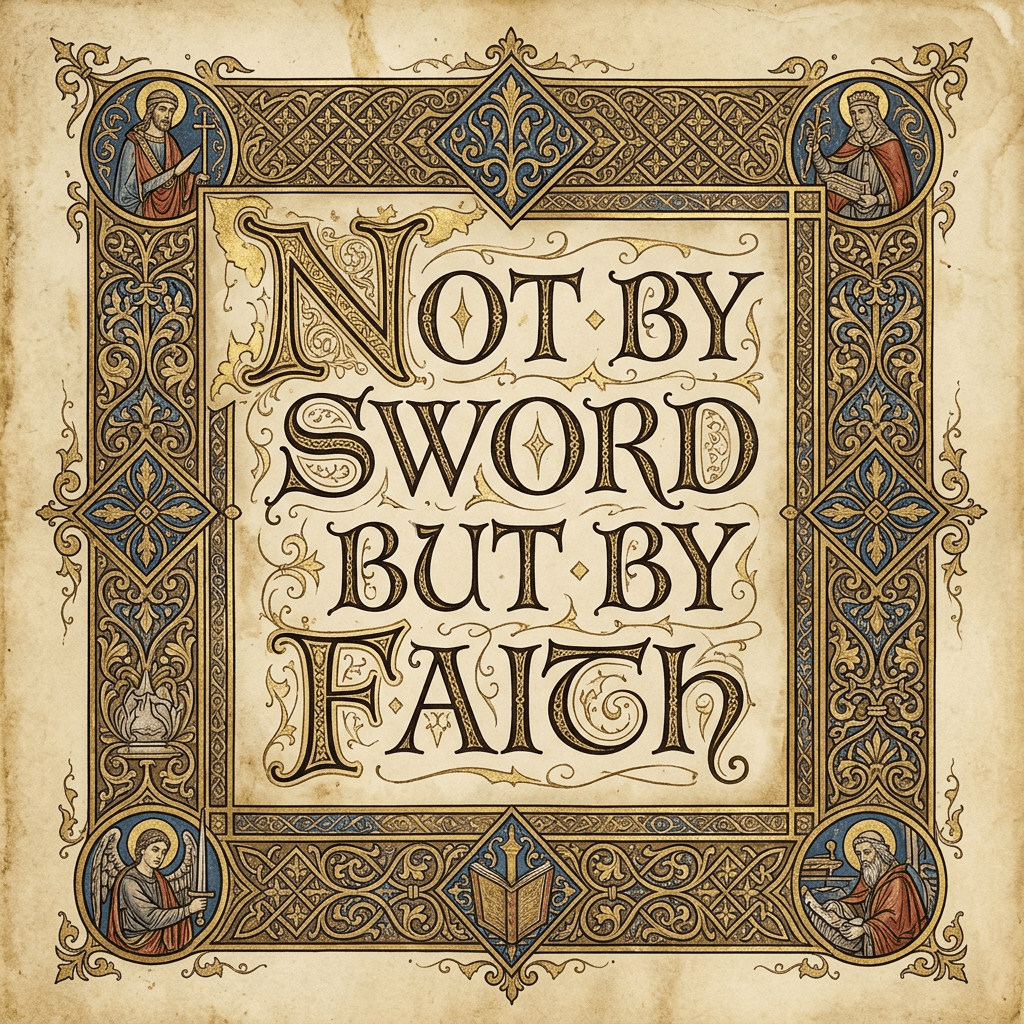
The phrase ‘not by the sword but by faith’ reflects a deep spiritual tradition. It explains victories achieved through reliance on God rather than physical strength or military might. A common parallel is the story of David vs. Goliath where David famously declared that God saves not by sword or spear, but by faith.
The world defines strength by visible power – wealth, control, or the sword. True endurance, however, usually comes from unseen convictions, how quiet, steadfast belief can outlast aggressive force. The sword can compel obedience, but only faith can inspire genuine transformation. The sword can symbolise a defensive or aggressive posture, trying to force outcomes or fighting back with anger or revenge. As Christians we are called to moving from a state of fighting our circumstances to trusting our journey in the hands of God.
At its core, faith is not about blind belief or perfect obedience. Biblical faith is rooted in trust. It is trust in God’s presence and character, even when outcomes remain uncertain. It creates steadiness during uncertainty and provides reassurance in moments that might otherwise feel overwhelming.
Faith is not the result of human action, but a graceful gift endowed on those with an open heart, with a fertile land to receive it, fortified through God’s word, the Sacraments and a humble disposition.
Our comfort, our sword, comes from Jesus himself “Come to me, all you who are weary and burdened, and I will give you rest. (Matthew 11:28)
Published in Sunday Times of Malta (July 2026) Gordon Vassallo

Leave a Reply